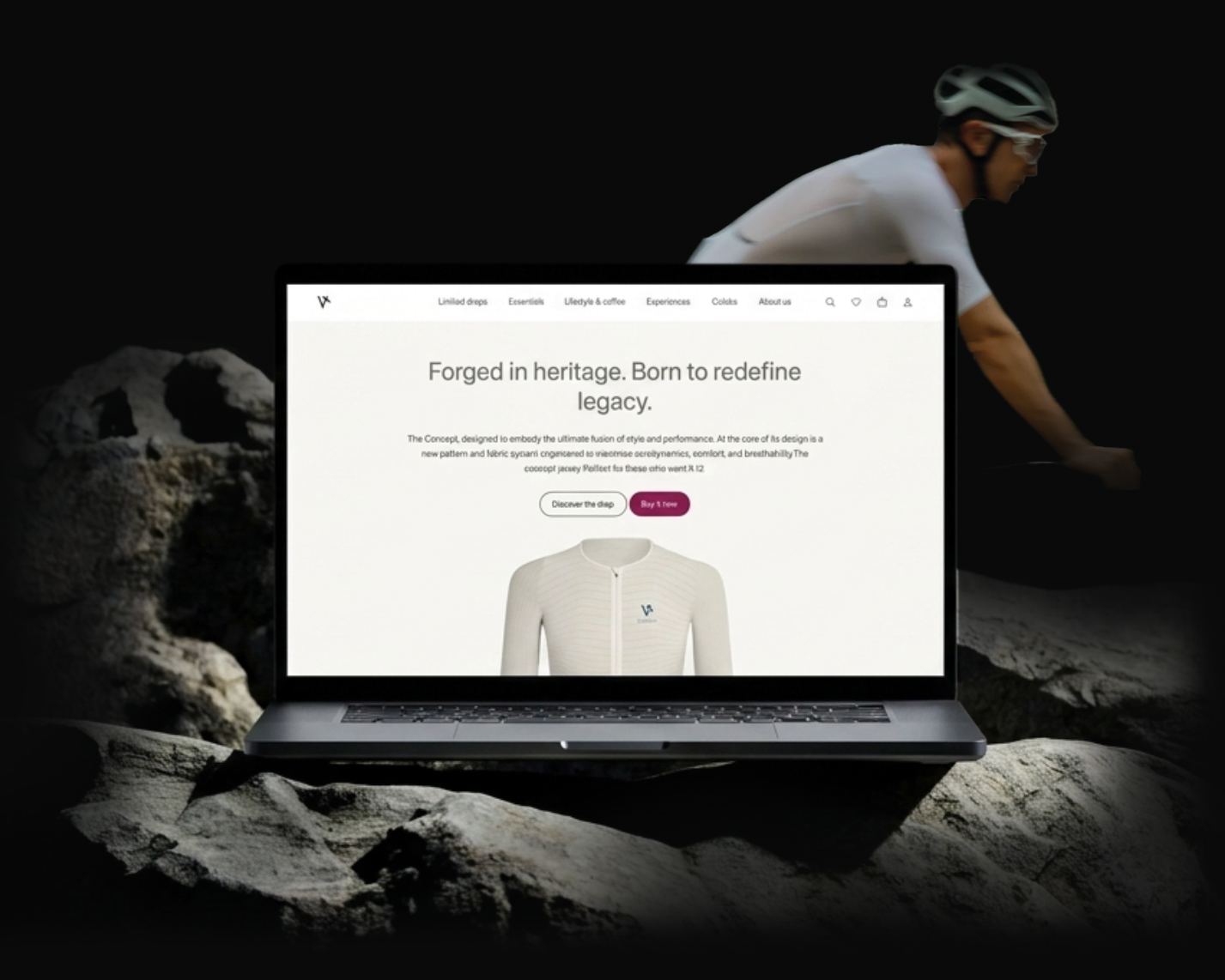
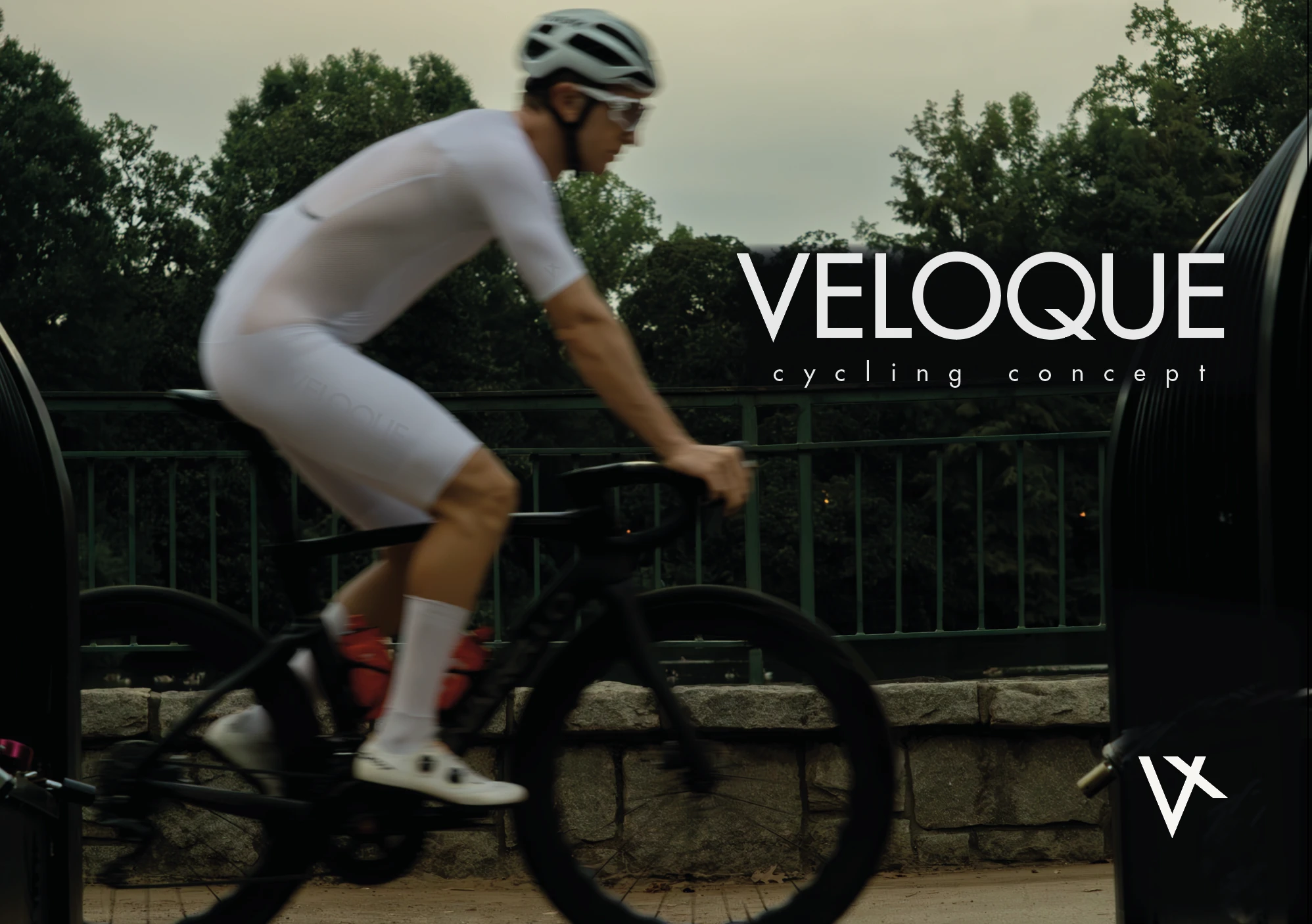
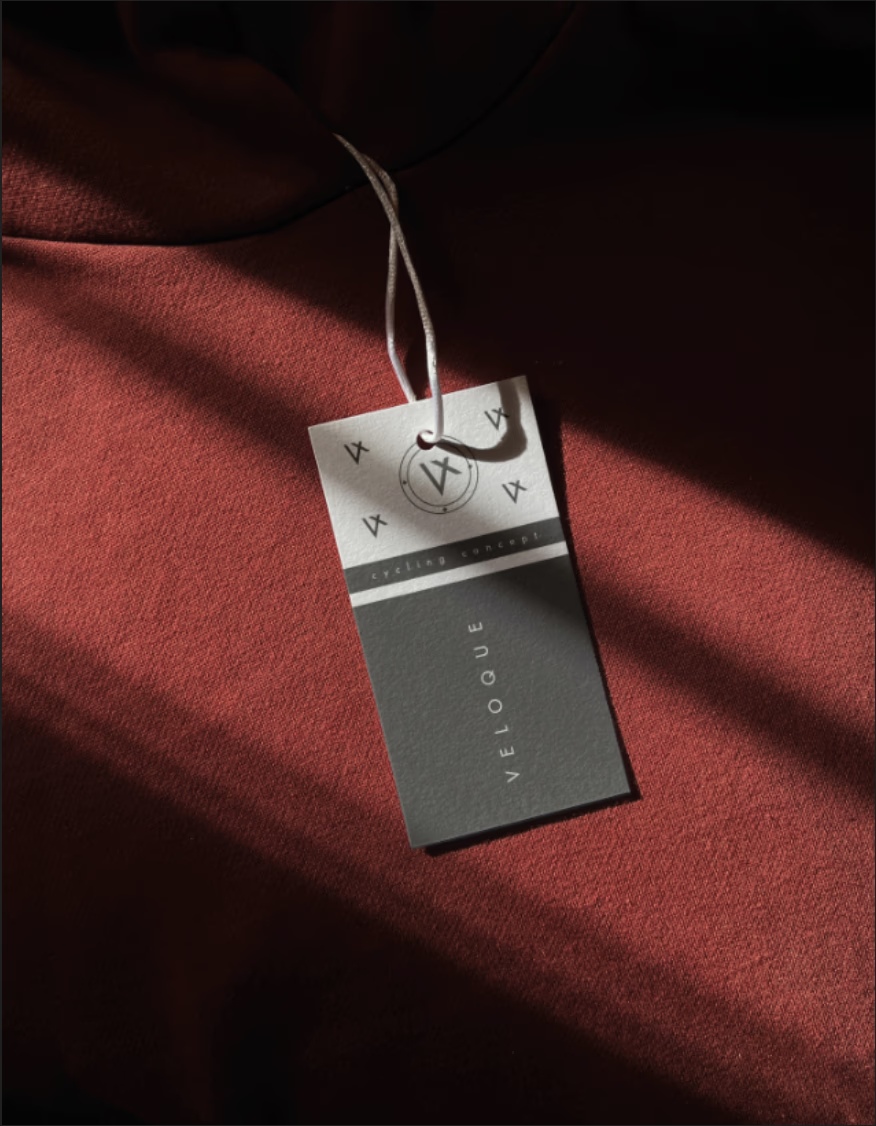
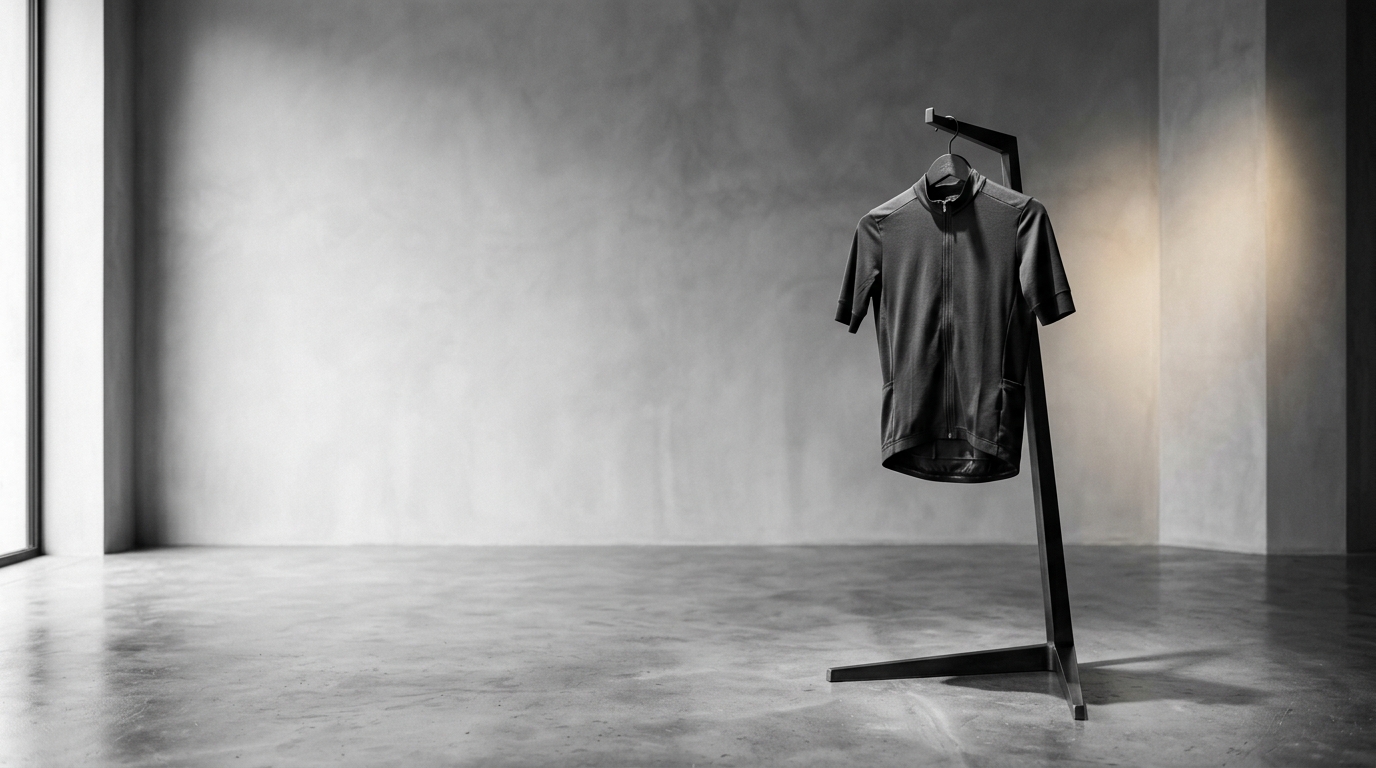
The luxury market and the cycling market have both grown for five years running, and nobody stood at the intersection. VELOQUE is the maison I built to close that gap: research, brand identity, e-commerce UX/UI, and industrial design, run as one continuous system over nine months.
Months of market and competitor study (MAAP, Pas Normal Studios, Assos, Q36.5), four rider personas and empathy maps. Every one of them had invested in identity, none in digital craft. The brand idea came out of that gap.
Those specs made development faster and more precise, with Figma, Claude Code and our own agent system: 27 technical garments, the e-commerce UX/UI and its conversion system, and a manufacturing partner taken through to a signed production agreement.
Every premium cycling brand has invested in visual identity. Almost none in digital craft, in listening to their users, or in the end-to-end experience. The opportunity is structural, not aesthetic.
Market context · five-year annual averages
7.5%Annual luxury market growth
8.1%Annual cycling market growth
0True luxury cycling maisons
The Brief
Designing a digital boutique
"Our challenge was to design a digital boutique, a brand and a digital experience that truly is perceived as a fluid exclusive experience."
A digital boutique in the old money register: modernist restraint, the codes of classic handcraft and classic cycling, delivered with modern technology.
Online Experience
01
Clarity showing the composition of the product range & brand structure
02
Show brand value and storytelling
03
High quality of purchasing experience
04
Help users choose the right product by features & purpose
Product Experience
01
Lack of innovation & repetitive tech solutions for 15 years
02
Products without specifying their use and information
03
Solve specific problems of product features that are always repeated
The Decision
Cap the range, don't chase it
Every competitor in the category treats catalogue breadth as growth. Our own category research, run with an external research partner, found the opposite: past roughly 30 SKUs, a cycling brand stops reading as premium. MAAP and Pas Normal Studios both lose luxury perception to volume, wide ranges, and the end-of-season discounting that volume forces. So instead of expanding the catalogue to chase revenue per drop, I capped it at 27 models across two collections, each one earning its place rather than padding a page.
01
27 models, not 50+.
The trade-off is real: a smaller range means less shelf space, less cross-sell, and a slower path to scale. I took it anyway, because the four personas from our research weren't shopping for a wardrobe, they were buying membership in a short, deliberate list of things worth owning.
Trade-off: scale vs. exclusivity
Range size vs. category research
27Models in the final range
~30SKU ceiling before luxury perception erodes, per external category research
Where It Stands
From empathy map to signed production line
Nine months turned four disciplines into one shippable system: 27 technical garments engineered to spec across two collections, a complete brand identity and brand book, a four-platform e-commerce architecture, and a signed manufacturing partnership. VELOQUE is currently in advanced sampling, with its first Limited Drop of six SKUs scheduled for production sign-off, and is waiting on investment to go to market.
Delivered across nine months, four disciplines
27Technical garment models
4Platforms, one experience
4Rider personas mapped
SignedManufacturing partnership
Four Chapters
The story, chapter by chapter
The thesis, the decision, and the outcome above are the whole argument in miniature. Each chapter below is where that argument gets its evidence. Read them in order, or dive into whichever discipline interests you most.
In Hindsight
What I'd do differently
Nine months across four disciplines taught me that a brand's hardest constraints are usually self-imposed, and worth it.
01
Capped the range on purpose. 27 models instead of 50+ was the right call for exclusivity, but it slows the path to scale more than I expected.
02
Lock in manufacturing earlier. If I ran it again, I'd start that conversation sooner so production timelines stop lagging behind design decisions.
03
Running a maison is a business, not just a design problem. Negotiating the manufacturing agreement and building the financial model took as much of my time as the 27 garments and the brand book combined.
04
Where it stands. Partnership signed, first drop in advanced sampling. Investment, the one variable outside my control, is what still stands between here and a public launch.
05
What's next. Sourcing a manufacturing partner that can scale without compromising the quality bar, running further testing, and raising the investment needed to fund both production and the go-to-market campaign.
Start with Research
The project begins with understanding the market opportunity, where luxury meets cycling, and where every competitor falls short.

 Figma
Figma
 Framer
 Next.js
 Shopify
 ChatGPT
 Typeform
 Claude Code MCP
 Rhino
Rhino
 Adobe Illustrator
 Adobe Photoshop