Research Toolkit
Tools & Platforms
Six platforms carried the research, from long-form market deep-dives to the survey instruments that produced the persona clusters.

Gemini Deep Research
Market deep-dives
Long-form research runs across luxury and cycling market data, growth reports, and competitor landscapes.

Claude Cowork
Collaborative synthesis
Working sessions to cluster findings, pressure-test hypotheses, and turn raw notes into research takeaways.

Claude Code · AI agent team
Agentic analysis & documentation
A multi-agent pipeline structured interview transcripts, survey data, and competitive research, cross-referencing everything into one corpus.

Figma
Research synthesis
Empathy maps, persona boards, and the FigJam user-flow diagrams that structured every research session.

Typeform
Screeners & surveys
Long-form questionnaires for cyclist personas: riding habits, spend patterns, and brand perception.

Google Forms
Quick-turn surveys
Lightweight polls distributed through cycling groups for fast, broad signal on early hypotheses.
Market Analysis
The Rising of Luxury and Cycling Markets
Two markets on parallel growth curves, and an intersection between them that no house has claimed.
We identified a strategic opportunity at the intersection of the luxury market and cycling through deep research in ChatGPT and NotebookLM. The overall luxury market grew from roughly €1.0 trillion in 2014 to €1.5 trillion in 2023 (Bain–Altagamma), while the global bicycle market grew from about $26 billion to $62 billion in the same period — including a +42% surge in 2020, when luxury dipped and cycling boomed. Two growth curves that reveal how cycling is evolving from a sport to a symbol of status, style, and well-being.
Sources: Bain–Altagamma luxury index and global bicycle market data, 2014 to 2023
Market Research
Two growing markets, one unserved intersection
Both the luxury and cycling sectors are on parallel growth trajectories. The overlap, a luxury brand built specifically for cyclists, remains an open white space with no dominant player.
Competitive Landscape
The Absence of Luxury and Good UX
Six premium cycling brands, audited side by side on design, value, community, luxury perception and comfort.
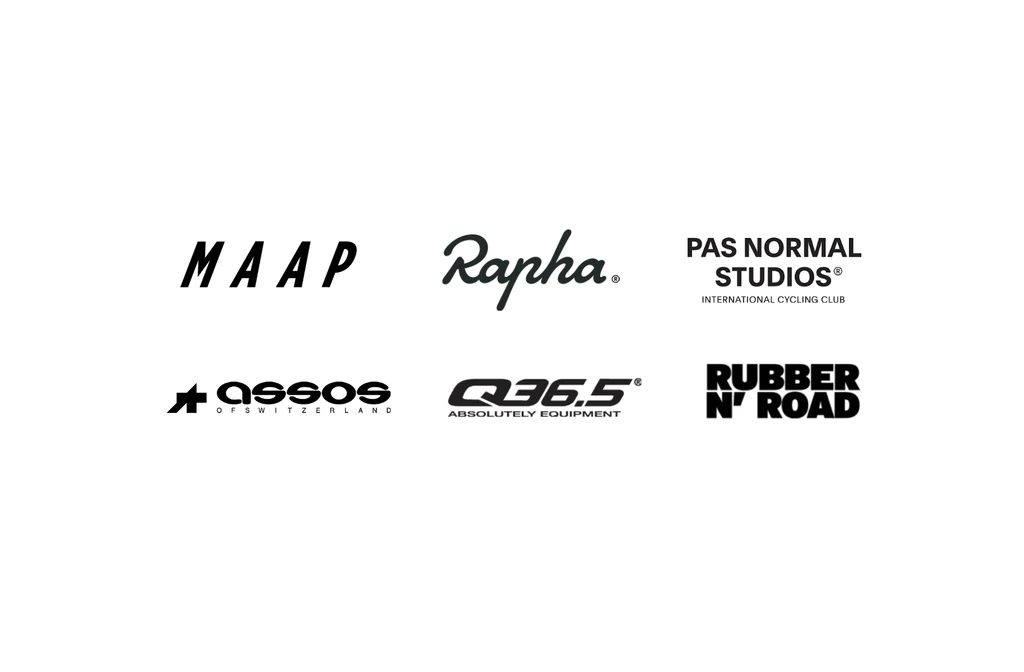
We analysed the leading brands in the sector: MAAP, Pas Normal Studios, Assos, Q36.5, Rapha, and Rubber N' Road NYC. While they stand out for their visual identity, their websites are confusing and display too many options, leading to user frustration.
The common failure pattern across all competitors: aesthetic ambition without UX rigour. Premium pricing paired with confusing information architecture destroys the luxury experience before the product is even seen.
What makes a curated web experience
During research we mapped the elements that turn a website into a curated experience, closer to a product than a sales floor. Three reference categories from outside cycling shaped our standard.

Apple
A premium-tech web that performs as a product experience, not a sales pipeline. Many users feel that even reaching checkout is hard, and that resistance is part of the desirability. The buying process is memorable, individualised per product, and offers deep customisation along the way.



Louis Vuitton + traditional luxury
Built on Shopify. Online sales aren't the core: the site reads as brand presence and catalogue. Strains under high product volume and deep internal navigation. Monumental UI: white background, soft white-to-grey gradients, no border-radius. Gucci, Hermès and other heritage houses follow the same pattern, varying only by inventory size.


Automotive & Performance Luxury
Luxury automotive brands invest in individual model storytelling, much shorter ranges and significantly higher price tiers. Each product earns its own narrative, a benchmark for VELOQUE's per-garment editorial pages.
Cycling brands with a perception of luxury
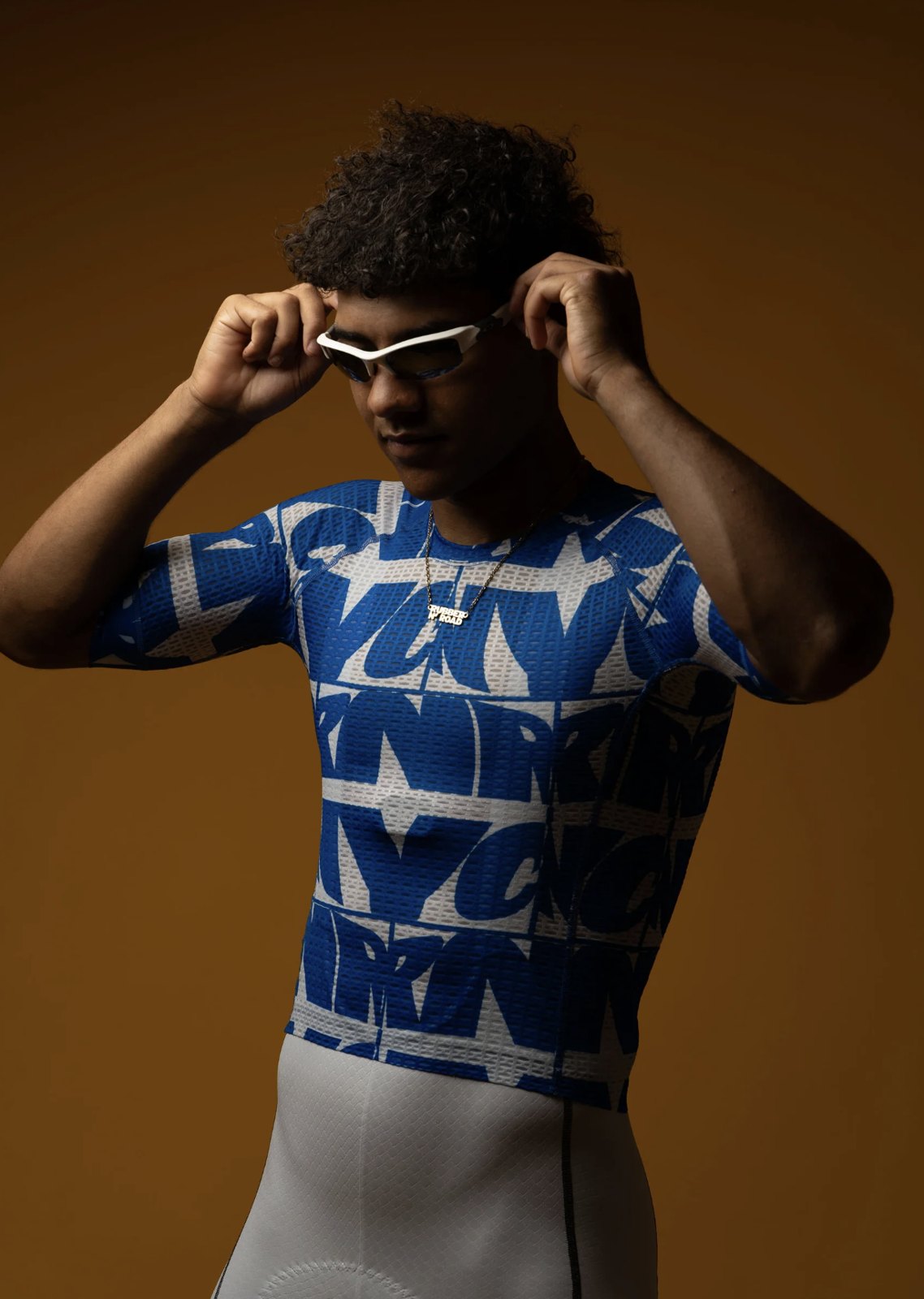
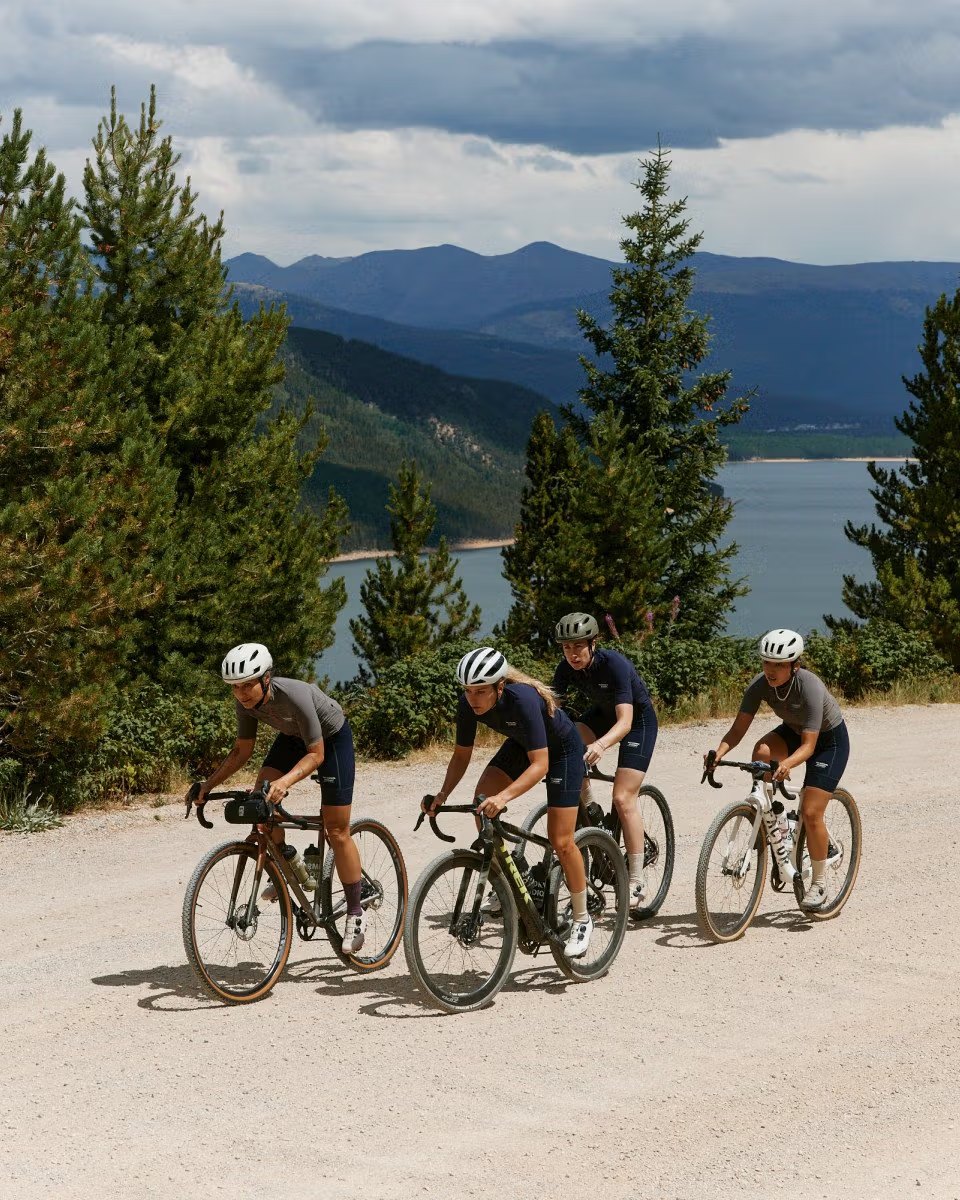
Within cycling, the brands carrying any luxury perception are MAAP, Pas Normal Studios, Pinarello (frames), Assos, Rapha and Q36.5. Below, the four most relevant to our positioning, broken down one by one. MAAP and Pas Normal both run on customised Shopify templates, which already secures a baseline UI quality, but each still surfaces friction.
-
01
Spectacular aesthetics undermined by complex navigation and sensorial overload.
-
02
Strong community and flagship presence, but volume and heavy discounting erode luxury perception.
Inter-category navigation is complex, and several UI choices create friction (confirmed in our user surveys). Dropdowns showing tag clouds of product names confuse users; product categorisation reads as ambiguous. Aesthetically MAAP is spectacular, but the lack of white space leads to sensorial overload for some users. A recently introduced sitemap section on the home page has been very well received.
Brand perception (interviews + surveys): premium, avant-garde design, strong community focus, with flagship stores in major capitals. Some users find it overpriced for the quality and comfort delivered, asking for more refined details and better durability. Loses luxury perception due to the wide range, production volume, and end-of-season heavy discounts, which point at a clear demand-management problem. Packaging is perceived as generic but well designed (logo shipping bags, vivid colours). Designed and manufactured in Australia.
-
01
Scandinavian minimalism reads as mid-tier luxury, but dense imagery causes cognitive overload.
-
02
Highest pricing in the category without matching innovation, value sits in the brand itself.
Navigation is even more complex. Cognitive overload sets in, with large amounts of imagery and graphic elements layered to build storytelling but distracting from the product itself. The catalogue is too large and stays online too long. Aesthetic is a Scandinavian / Danish minimalism that aligns with mid-tier luxury but never reaches the very top. Pops of vivid colour, bold lettering and the logo are the only standout graphic elements.
Pricing is the highest of the cycling field, without justifying it on real innovation or technical quality, positioning the brand as aspirational, with value residing largely in the brand itself. The site struggles to communicate optimal use per garment and how to combine pieces into versatile outfits. The brand polarises: perceived as posh or pretentious by some, deeply desired by others. Notable upside: gravel and influencer sponsorship campaigns fuel a clear storytelling thread visible across home, landings and social.
-
01
Premium-technological positioning: Q36.5 on innovation, Assos on comfort, both praised on value.
-
02
Visual design and online experience have fallen behind, capped further by WordPress/WooCommerce.
Both sit as premium-technological, not aspirational. Q36.5 leans on innovation; Assos leans on comfort. Many of our interviewees praised the value but felt the visual design has fallen behind. Neither delivers a memorable online experience. Both are built on WordPress with plugins and WooCommerce, which limits how far the digital craft can go.
From this research we extracted the takeaways, covering opportunities, decisions to copy, and decisions to avoid, then translated them directly into the UI principles you'll see in the next chapter.